ICE has spent most of this year going quiet, and the quiet is what’s making it deadlier. The larger, visible operations that defined last summer’s enforcement campaign are now giving way to something harder to see but still just as violent: small-scale enforcement stops that target people in the most ordinary moments of their day– on the drive to work, dropping off kids to school, outside a courthouse, or parked on their own block.
A Turning Point
Last month, three people died in the span of a little over a week during ICE enforcement stops. On July 7th, agents shot and killed Lorenzo Salgado Araujo in Houston, Texas while he was on his way to work. Six days later, in Biddeford, Maine, an ICE officer shot and killed Joan Sebastian Duran Guerrero, also on his way to work. The next morning in St. Augustine, Florida, Juan Jairo Coronilla Durán lost his life after being struck by a tractor-trailer while trying to escape an ICE encounter.
None of these deaths occurred during a massive raid. We know what massive raids look like. Untrained agents in tactical gear. Vans blocking the exits. A workplace stormed in broad daylight. The kind of operation that with enough warning from community-run rapid response networks, neighbors can meet head on– showing up, recording, and holding the line until agents leave before an arrest even happens. ICE knows this, so they are changing the playbook.
And now, as all illusions of accountability continue to erode with the recent announcement that the FBI will no longer be investigating ICE confrontations, it’s key to understand what’s at stake.

Instead of high-profile raids, ICE is pivoting and leaning harder in smaller, quieter investigative stops– with countless cases already citing racial profiling as the main reason behind them. Traffic stops, courthouse ambushes, or plainclothes agents waiting in unmarked cars outside of homes and businesses. These operations move faster, leave almost no trace, and give communities no time to organize a response. This is exactly what makes this shift more deadly.
Same Machine, New Playbook
Last year, huge operations were the default. Within half a year of Trump’s second administration, ICE publicly reported dozens of worksite enforcement actions that resulted in over a thousand arrests, with some single operations sweeping up hundreds of people at once. Whole campaigns were built to show off the size and scale of ICE’s unchecked power: Metro Surge in Minnesota, Midway Blitz in Illinois, and Charlotte’s Web across North Carolina. They deployed hundreds of agents into cities for weeks, moving through neighborhoods in unmarked vehicles.
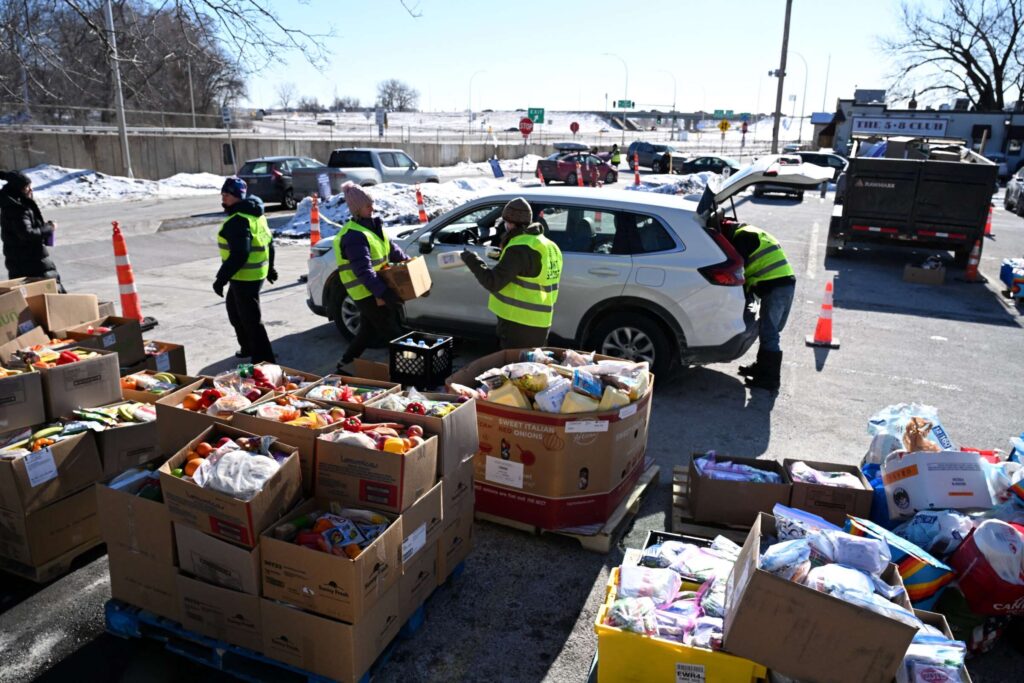
But if the point of those operations was to scare us out of fighting back, it didn’t work. Communities built rapid response networks, tracked agent movements block by block, showed up in numbers, and stood firm against ICE intimidation. Neighborhoods established mutual aid hubs to keep each other’s pantries stocked, medications delivered, and kids walked safely to school. Local elected officials pushed back and used every legal tool they had to block ICE wherever they could. Public opinion of ICE tanked across the political spectrum, and people everywhere rose up in opposition.
ICE didn’t take long to find its next move, though, because the agency has never had to build anything from scratch. It already had billions in new funding, and access to countless surveillance tools: facial recognition, automated license plate readers, phone tracking, and data-sharing pipelines pulled straight from local police and DMVs across the country. And with an authoritarian, white-supremacist administration behind it that refuses to hold it accountable, ICE is more emboldened than ever–operating with zero scrutiny, free to terrorize our communities without consequences.
Fighting Against the Why, Not the How
From Texas to Maine, communities around the country are rising up to honor the lives stolen by ICE. Vigils and actions are being organized to share space to mourn, to remember, and to make one thing clear: our fight isn’t over. People everywhere are stepping up to defend their loved ones, protect their neighbors, and keep their communities safe. But even with the recent shootings drawing national attention, much of the conversation is stuck right where it’s always been: on the tactics. What’s missing is the harder conversation, the one about ICE itself.
The problem is ICE’s unchecked power, its expanding infrastructure (both digital and physical) and its culture of impunity. ICE’s violence isn’t a string of accidents that more resources or better training can fix.
We can’t ignore that this recent shift in street tactics is also happening within the context of the deadliest years on record for deaths in detention. ICE recorded 33 deaths in custody in 2025, the highest annual figure in over two decades— and that toll keeps climbing.
This week, Edwin Lopez-Cornejo, a 41-year-old Salvadoran man, died on August 1st after a medical emergency at the Delaney Hall facility in Newark, New Jersey. And last month, 29-year-old Prisciliano Trejo Ricano died on July 24th after being denied care for an aggressive leukemia diagnosis while detained at Stewart Detention Center in Lumpkin, Georgia, with family sharing he was only taken to a hospital once his condition became critical. Over 50 immigrants have died in ICE custody since Trump returned to office. It’s the design. The cruelty is the point.
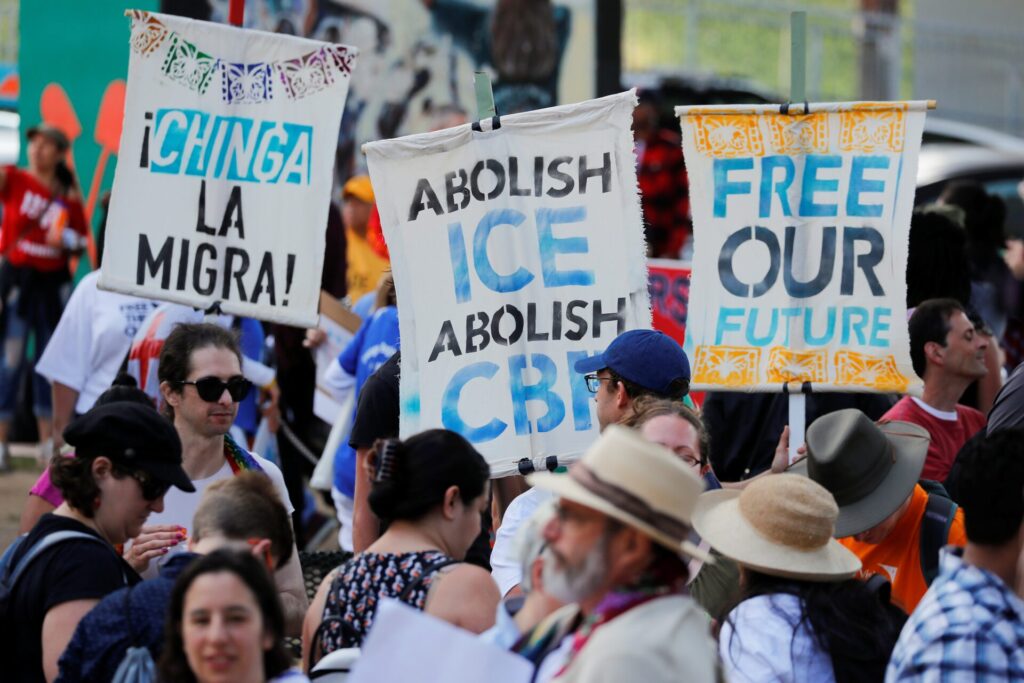
Organizers and communities have been calling to abolish ICE for years, long before it became a popular slogan adopted by candidates on the campaign trail. Even elected officials are just now starting to catch up to what people on the ground have known all along: this system cannot be reformed. But even the loudest rhetoric always stops short of winning our gente the one thing we need. We deserve the safety to go about our daily routines and the security of knowing we will make it back home.
Fewer raids showing up in our timelines, and the fact that fears of ICE arrests at massive events, like the World Cup, didn’t materialize might make it seem like they’ve pulled back completely, especially set against last summer. But they haven’t.
There’s a strategic reason for that shift, and it has nothing to do with ICE or the administration that enables it actually pulling back on the violence.
What the World Cup Covered Up
When organizers sounded the alarm about ICE targeting stadiums, workplaces, and community gatherings in the months leafing up to the World Cup, it didn’t come out of nowhere. Trump has a track record of turning public events into stages for his anti-immigrant agenda. Consider ICE’s presence at the Super Bowl in New Orleans earlier in the year, widely publicized and used for content across DHS’s social media accounts. It was meant to push the idea that they were providing “security” and “public safety”, but was a failure by the administration’s own standards.
The presence during major sporting events fits a pattern we’ve seen play out since Trump took office– this administration thrives on theatrics because they know that’s what drives fear. But with the global spotlight on the World Cup, Trump’s ego couldn’t handle the backlash of a botched operation under international scrutiny.

The administration’s choice to avoid high-profile stunts was absolutely a strategic one. It played the systems that control the topics and narrative, calculating exactly when and where ICE could afford to make their moves in the shadows. While the cameras stayed fixed on host cities’ stadiums, ICE ran its deportation machine full force everywhere else, ramping up its arrests and violence in neighborhoods across the country.
While we didn’t see the news break about massive raids, enforcement started to ramp back up just as the final matches of the World Cup were being played out. In the first two weeks of July, ICE was on track to arrest the most people in a single month at any other point in this administration, consistently doubling their daily arrests numbers over and over again to meet their detention quotas.
To fight back against the deportation machine, we need to know what’s coming. ICE isn’t slowing down, and as long as they can operate unchecked, their violence is only going to escalate.
The Net That Keeps Widening
As ICE shifts its tactics, it is also widening who it targets. In late June, the Supreme Court ruled 6-3 to let the administration strip Temporary Protected Status (TPS) from roughly 350,00 Haitians and thousands of Syrians, tearing away over 16 years of protection in a single ruling and leaving hundreds of thousands of people now suddenly vulnerable to deportation.
Leading up to the decision, courts had already found that the administration skipped the necessary legal review Congress requires before officially ending TPS. Even at the highest court of law in the US, proper procedures are being violated with little to no consequence.
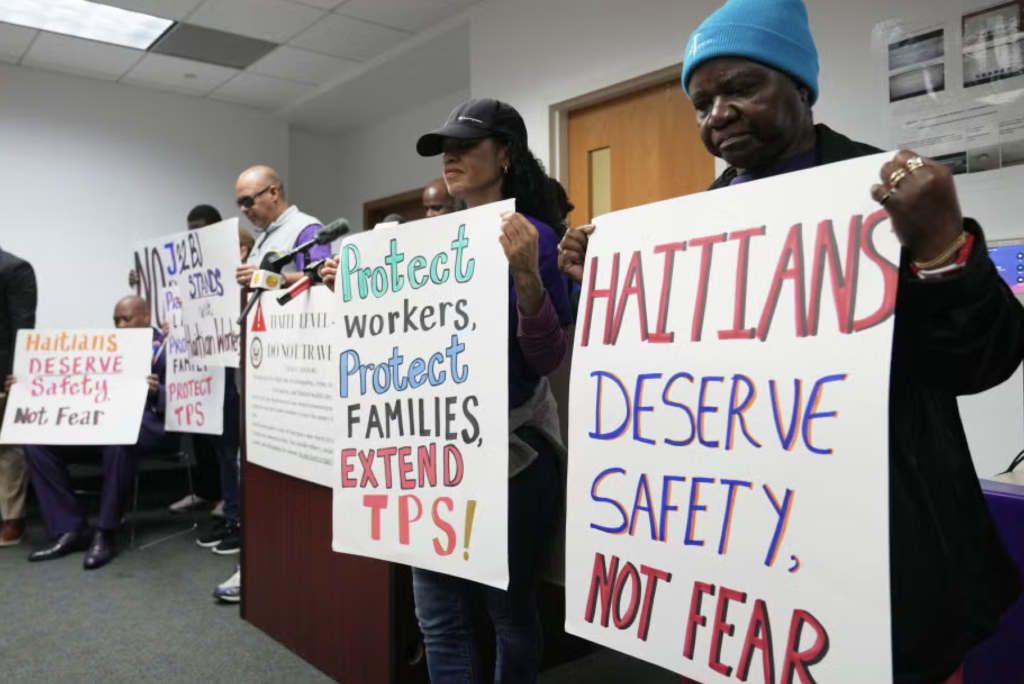
With this recent TPS decision, this administration is weaponizing the Supreme Court to expand who it can detain and deport. And it’s fueled by a xenophobic and white supremacist agenda aimed at destroying Black and brown communities.
That’s what the tactics are evolving into: no matter who’s protection gets stripped next, the pattern will be the same: finding a new legal lever, pulling it quietly, and letting ICE take over the rest.
Silence is Not Safety
We must remain on our guard: Fewer viral raids don’t mean ICE has slowed down. It means they’re adapting their tactics and moving in ways that are harder to notice, harder to document, and harder to fight back against.
For so many of us, the work never stopped. Rapid response networks kept mobilizing, mutual aid hubs kept families and community members supported, and organizers stayed prepared for the next wave. We know that the shift away from large-scale raids never meant less harm and violence, just fewer headlines. And if over ten years of organizing together as a political home has taught us anything– through protests, hearings, meetings, and every place we couldn’t afford to give up– it’s that the system never lets up. It just evolves, and the strategies behind our resistance have to evolve just as fast, if not quicker.
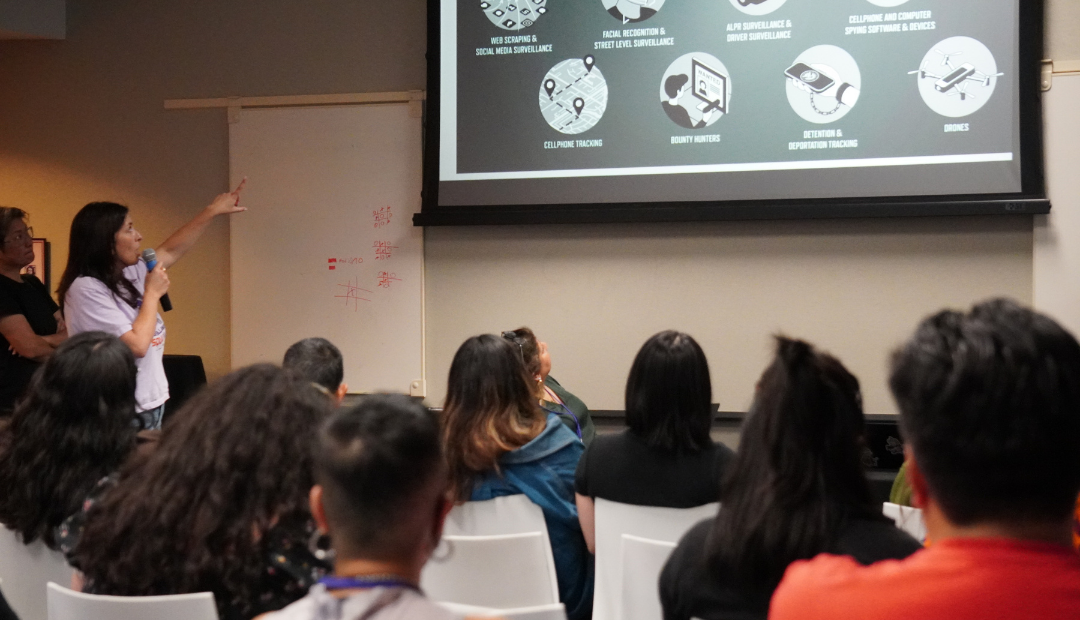
That’s why we’re building toward a deeper fight. Because we can’t fight back against what we don’t understand. We released our latest report “The Tech Behind ICE: Oligarchs, Enforcement, and the Threat to Democracy” alongside Just Futures Law and Surveillance Resistance Lab to expose the technology fueling the deportation machine. Hundreds of compas from across the country joined our webinar where we broke down key findings and the role Big Tech is playing in targeting, surveilling, and deporting our gente. And soon, we’re launching a series of No Tech for ICE Asambleas across the country to connect with community members, organizers, students, workers, and advocates to build for the fight ahead.
The three lives lost to us this month in the streets– Lorenzo Salgado Araujo, Joan Sebastian Duran Guerrero, and Juan Jairo Coronilla Durán– are a reminder of what’s at stake. They were beloved sons, fathers, neighbors, friends– and people who showed up every single day for the families depending on them. They deserved to live full lives: to raise their children, to thrive in their communities, and to build the futures they were working toward. Nothing can ever bring back what was taken. But we owe it to them, and to everyone ICE targets next, to fight harder, to organize stronger, and to keep advocating for a world where our gente are safe, free, and able to live without fear.
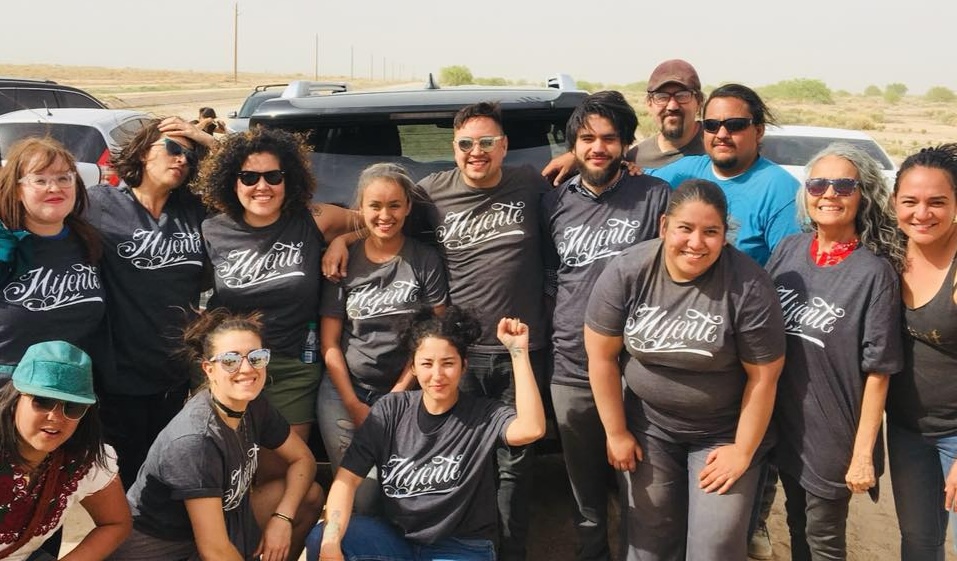
ICE’s tactics keep changing. Our commitment to each other and to defending our gente doesn’t.
We’ve taught each other how to fight, how to resist, and how to hold onto the truth that our collective power will always be stronger than any system of violence we’re up against.
We know that organizing against ICE violence under white supremacy, capitalism, and so many other systems of harm takes a toll on our bodies and minds. Please consider checking out the Tending to Your Nervous System Care Practices Guide, created by our compas at the Latinx Therapists Action Network, as a free tool to support you (and your compas) in this fight.